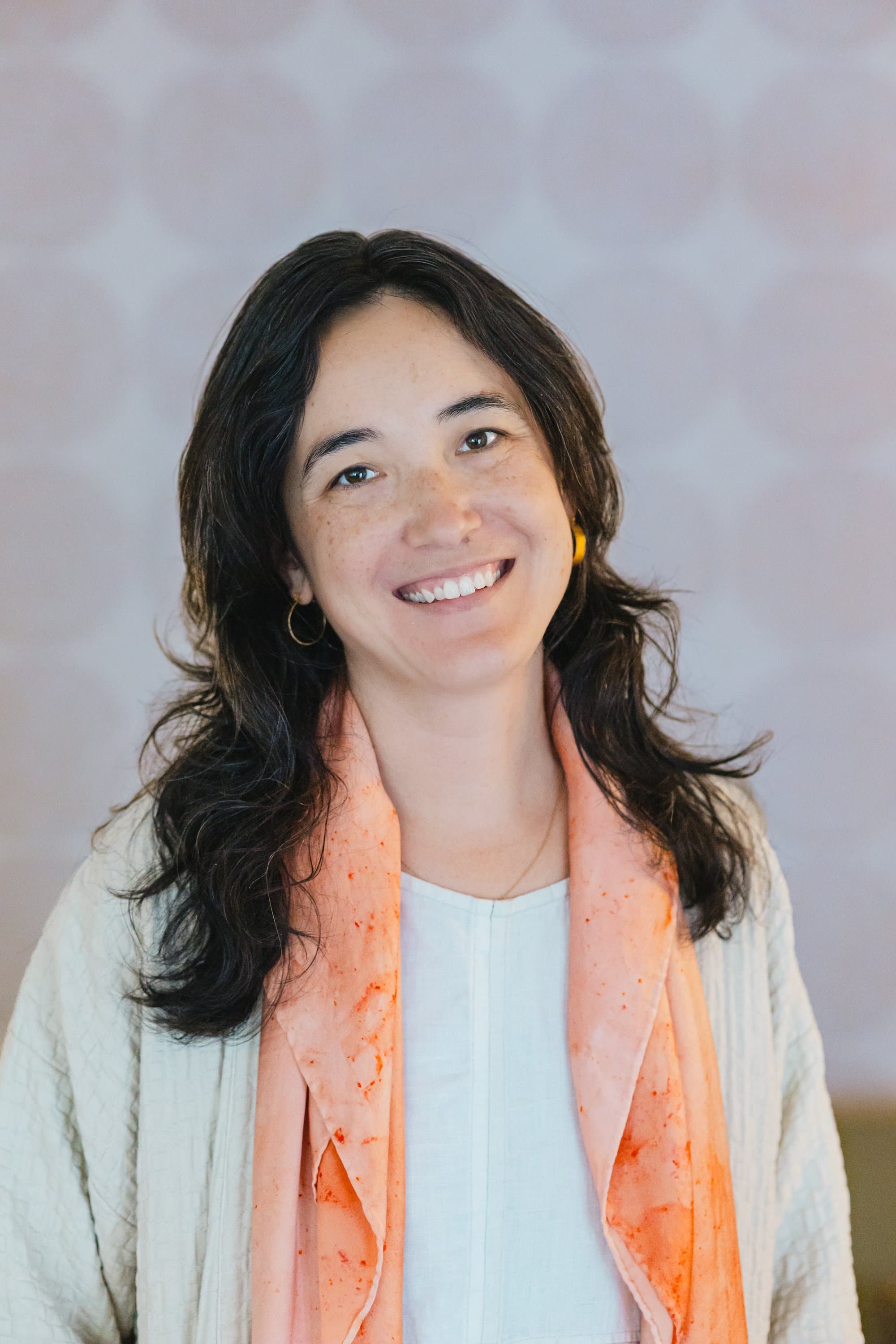
Rachelle Robinett is an herbalist, a teacher, and the author of Naturally: The Herbalist's Guide to Health and Transformation. She founded Pharmakon Supernatural and spent more than a decade teaching people to trust plants, and themselves, through her classes, her writing, and her podcast. Today she lives in Costa Rica, where herbalism has become less a profession and more a way of living. We asked her about rituals small enough for the first weeks with a newborn, what a depleted nervous system needs, and where a tired mother might begin.
Rachelle, we'd love to start with your own introduction to herbalism. Was there a moment or a plant that first showed you what tending the nervous system could actually feel like in the body?
Over the years, countless herbs have reminded me what it feels like to have a harmonious nervous system but, most of all, it’s nature at large that I’ve found most effective for creating this state. While I love, and recommend, ingesting all the nervines we need (nervines are herbs that specifically balance and rehabilitate the nervous system) the most effective medicine is often our environment. And that doesn’t have to mean a vacation, a retreat, or literally touching grass if those things aren’t accessible to us. A walk outside in fresh air or sunlight, sitting on a park bench and watching the movement of trees, or taking note of the nature that grows even through city sidewalks can be enough if done with intention and regularity.
Herbalism always asks us to address the causes of symptoms so if our nervous system needs tending to, it’s often a lifestyle change before a supplement that we need. An example I love is the ritual of making tea …
So much of your work centers on ritual as a container for care. What does a ritual for a depleted or overstimulated nervous system look like to you, and how do you think about scaling that down for someone in early postpartum who barely has ten free minutes?
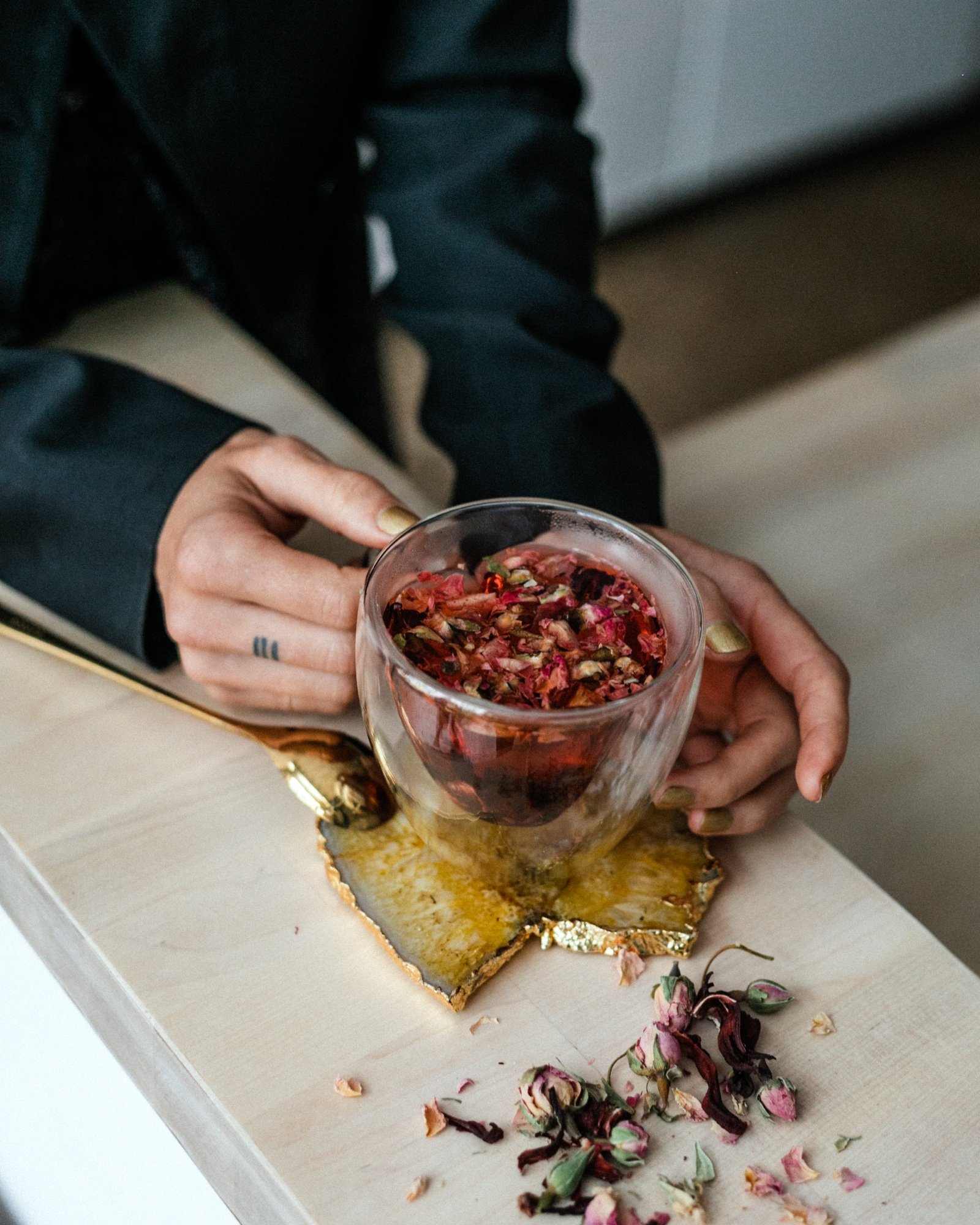
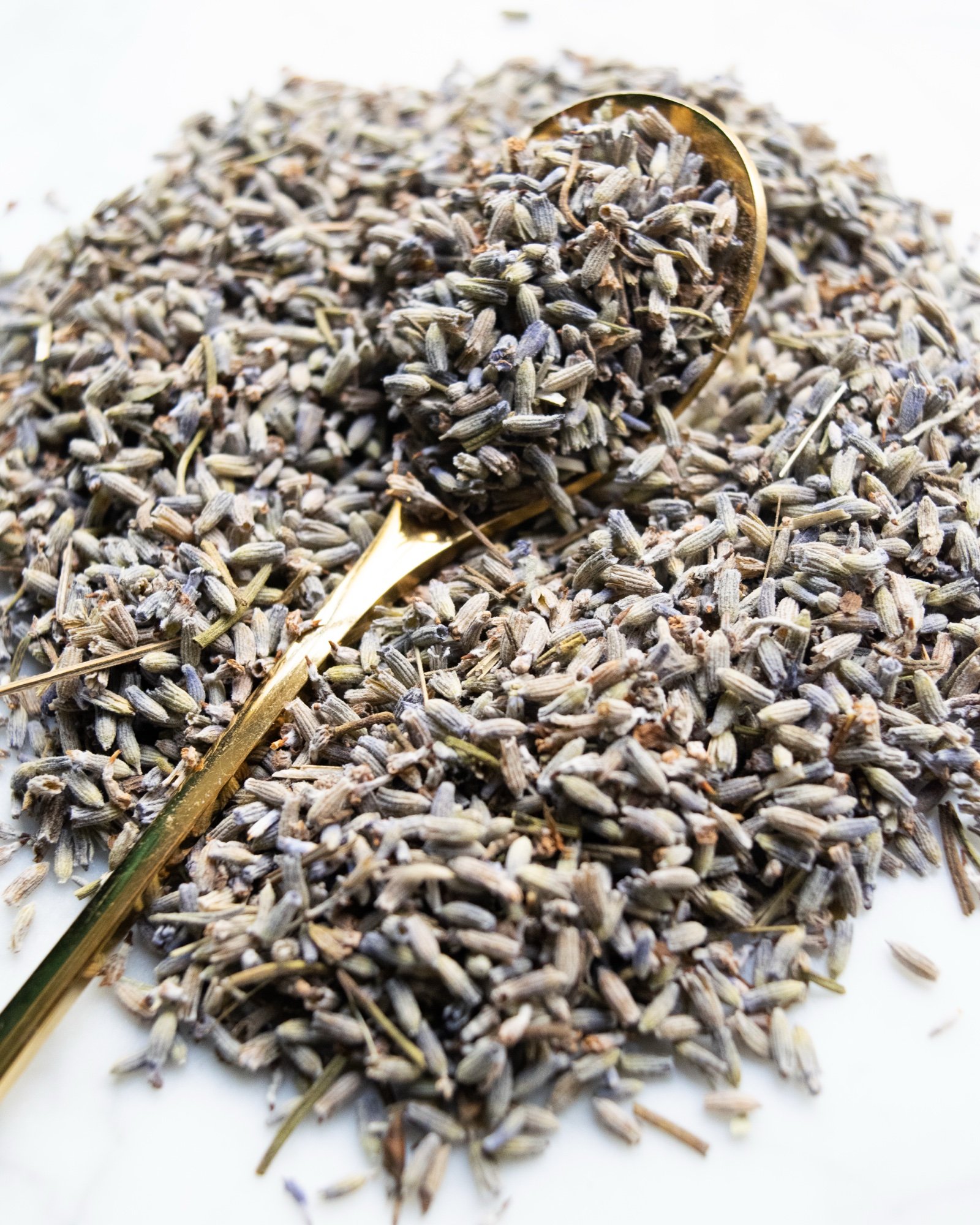
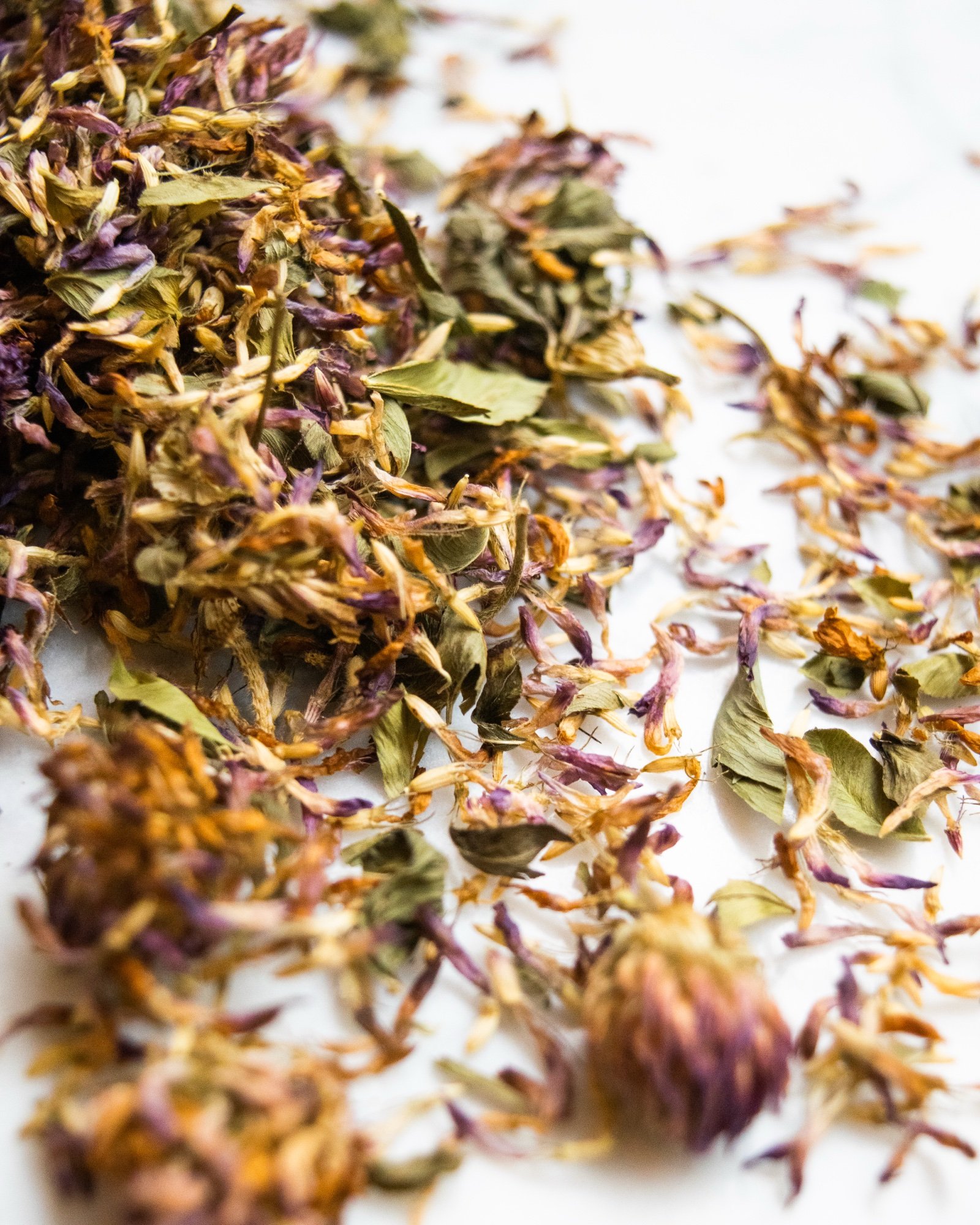
Make tea! Choose lavender, chamomile, lemon balm, or milky oat tops—all calming nervines—and allow the time it takes to prepare and steep to be a moment of reconnection with nature. And, from my book, Naturally: “This is the power of herbalism: The act of making tea can be as beneficial as the tea itself.”
A couple of minutes is enough, because the ritual is the pause. One cup, one slow breath, hands around something warm, and the question: what is my body asking for right now? And sometimes, it may just be a few deep breaths, or looking out the window to notice the light, the breeze, or the birds in the trees—all reminders of the natural world that we are part of.
Adaptogens get talked about so casually now, almost like a trend. Can you help us understand what's actually happening in the body when we lean on them, and where you think the postpartum nervous system needs something different from what a stressed-out executive might need?
Adaptogens are ingredients that assist our adaptation to environmental stress—physical, or psychological. They work through the HPA-axis and the sympathetic nervous system to mitigate the negative effects of stress, like cortisol-induced mitochondrial dysfunction. They improve our resilience, or our ability to respond to and recover from stress.
Adaptogens work a bit like a thermostat, adjusting levels up and down as needed to maintain homeostasis. They are not stimulants and they are not sedatives; they want us to be our very best normal selves. And they need to be used regularly (daily) to reach full effect. Using one adaptogen one time is a bit like eating kale salad once.
Here's where the two nervous systems you asked about differ: The stressed-out executive is usually in overdrive—a system stuck on—and the temptation is to use adaptogens to endure a poor work-life balance. We don't recommend that, because it only delays the inevitable: burnout, and makes us less able to sense when we've hit the wall. A postpartum nervous system isn't overdriven, it's depleted and rebuilding: sleep, nutrients, hormones, and identity all in flux at once. So the order flips. Nourishment and rest come first; nervines for the acute moment — oat for rehabilitation of the nerves, chamomile and lavender for calm …and calming adaptogens (like ashwagandha) as a long-term foundation underneath, never as a way to push through depletion.
One system needs to come down from overdrive. The other needs to be rebuilt.
Writing a guide to herbalism means distilling something ancient and layered into language other people can actually use. What did you learn about your own relationship to plants through the process of teaching it to others?
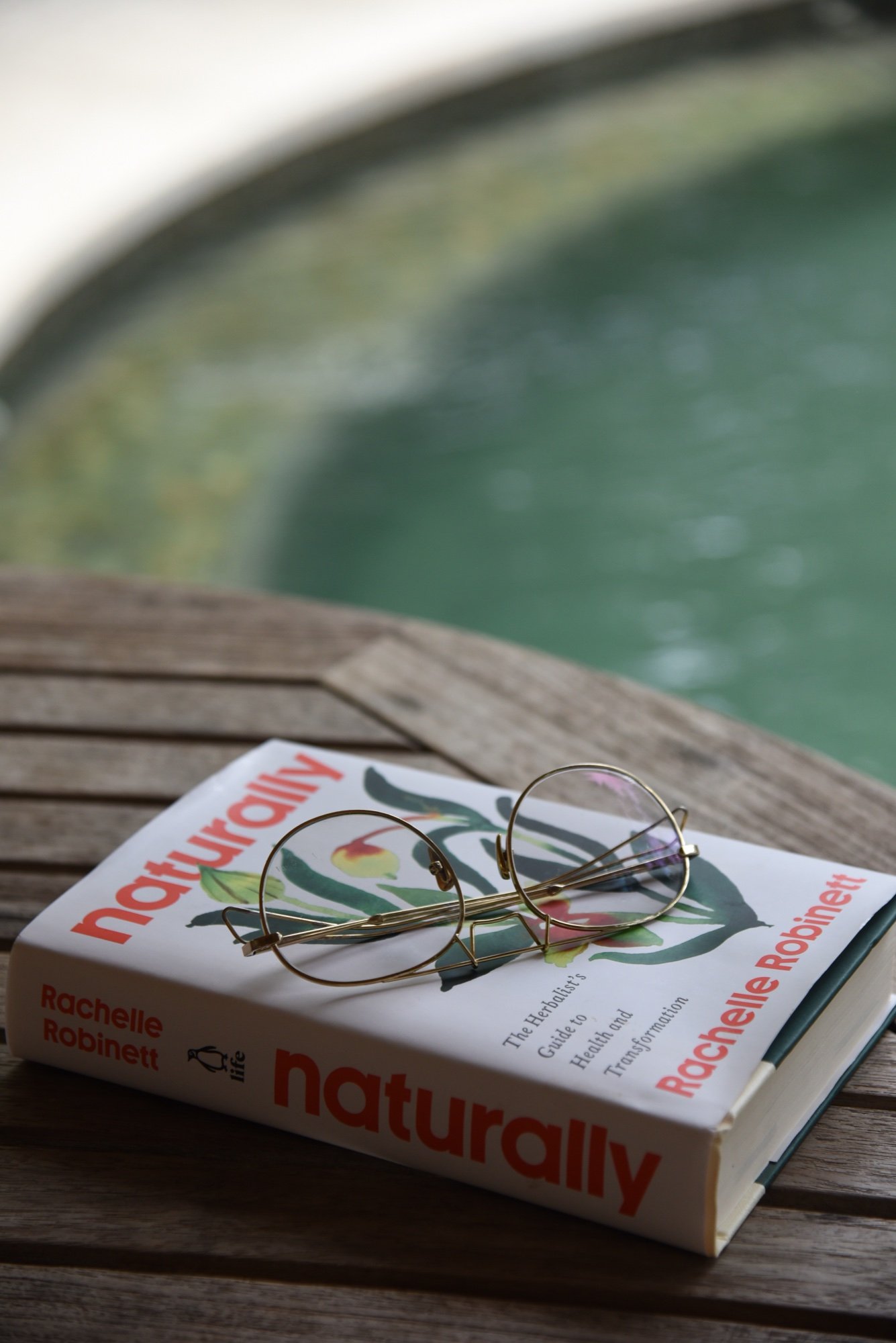
Publishing Naturally was truly a lifelong dream come true. From the time I was a little girl, I wanted to write, and I didn't have the courage to pursue that as my original career path. I really wanted Naturally to be not a textbook but a literary experience—something that would educate, inspire, and also leave people feeling empowered.
Teaching herbalism for over a decade taught me that the gap isn't knowledge, it's trust: a lot of people aren't yet at the stage where they can trust themselves or feel like they know enough about the plants. That's the gap I worked to close, because we're all herbalists, whether we know it or not.
And writing it changed me. Through writing the book (which meant stepping away from my businesses) and since moving to Costa Rica, I've been dismantling the degree of integration between myself and my work—my public persona, my personal brand, my businesses have been one and the same for decades. I've been unlearning how to work, to live, and learning for the first time what it's like to just live and to just be. Now, I'm practicing herbalism less as a profession and more as a way of living. I’m immersed in it all day long, every day, because I live in nature now and I realize how little we need in the form of hacks and stacks (as I call them) when we can find ourselves in the right environment.
The thesis I keep coming back to is that those who seek to improve their health are often driven by the underlying desire to connect with their truest nature. Our health is one reflection of that nature, and it also serves as the medium through which we live our lives.
You host conversations with so many different practitioners on your podcast. Has anyone's perspective on the postpartum period, or on nervous system repair more broadly, changed how you think about your own work?
What most changed how I think about my own work was leaving the United States and much of capitalism and the surrounded culture of consumerism behind. We need far less than we realize and it can be difficult, even impossible, to see that from within a system. My path isn’t for everyone, of course, but the learnings are of benefit for all of us: the foundational pillars of health remain essentially unchanged—we need good food, water, rest, community, purpose and, most of all, to remain as connected as possible to our selves (present and future) while recognizing that we are natural processes of continual growth and change as is everything in nature.
We're curious about your definition of nourishment. Has it shifted as your practice has matured, and does it look different now than when you first founded Pharmakon Supernatural?
Yes and no! The through-line never changed: nature knows. I have been recommending more or less the same protocols all along (all of which are in my book), but what’s changed is that I closed my businesses and transitioned into a lifestyle in which I, personally, can be embedded in what’s most nourishing to me 24/7.
I’ve always been a philosophical herbalist, which means that I believe most in the ideas of herbalism—that we are nature and that healing is found in nature. The which-herb-when, the how-to’s and recipes … these specifics have always interested me less. That information is readily available! What’s taught less often is how to listen to our bodies, how to interpret what we hear, and then how to be courageous enough to act on it.
For example, what was most nourishing for me was to heed the signs to leave my life (marriage, career, NYC, and country) for an unknown promised land. Since taking that leap, I’ve never been healthier, happier, or more thoroughly nourished.
For a mother reading this who feels like her nervous system is running the show rather than the other way around, where would you gently suggest she begin, plant or practice or otherwise?
Read my book! I have entire chapters dedicated to systems of the body, including the nervous system, the stress-response system, and more. 🙂
Otherwise, begin by naming the state you're trying to shift before reaching for anything. Identify it and feel it, if even for just a few seconds. Then, act according to what you most need, which often differs from what you might want.
Start with the lowest-friction format you will actually use: consider prepackaged tea, capsules, whatever calls to you. For immediate calm, I always recommend nervines first, and then adaptogens (see those previously mentioned). But, herbs always come after food, water, movement, and rest.
Start with just one change at a time and don’t add another until the first is second-nature. Think long-term, rather than seeking a one-off fix: light exposure, meal timing, breathwork—small things that regulate the autonomic nervous system more effectively than isolated hacks—plus boundaries and an adjusted environment, because herbs alone are never enough.
And if wellness culture itself feels like part of the noise, ignore it all and reflect inward instead. Ask the one question: what would help me feel more like myself right now? Sometimes it's rest. Sometimes it's tea. Sometimes it's quiet.
As always, consult with your doctor or healthcare provider before combining herbs with prescription medications or birth control—and before using if pregnant or nursing.
Rachelle Robinett is an herbalist and the author of Naturally: The Herbalist's Guide to Health and Transformation, published by Penguin Random House.