The single biggest lever for milk supply is consistent removal of milk (through feeding or pumping) alongside enough calories, fluids, and rest. Specific foods, often called galactagogues, can offer modest support around the edges, but none of them substitute for those fundamentals. If you have real supply concerns, the most useful step is working with an IBCLC or your provider, who can look at feeding mechanics, frequency, and your specific situation.
What actually determines milk supply?
Milk supply is driven primarily by demand and removal. The more consistently and effectively milk is removed from the breast, whether by baby or pump, the more the body is signaled to produce. Underneath that mechanism, a mother's body still needs raw materials: enough calories, fluid, protein, and rest to keep making milk without depleting herself.
This is why postpartum nourishment matters so much, and why food alone rarely fixes a true supply issue. Food supports the system. It doesn't override it.
Do specific foods actually increase milk supply?
Some do, modestly, and mostly through indirect mechanisms like inflammation, relaxation, or simply making it easier to eat enough. The evidence quality varies a lot by food, and most research is limited, small-scale, or based on traditional use rather than large clinical trials. Here's an honest breakdown.
Oats
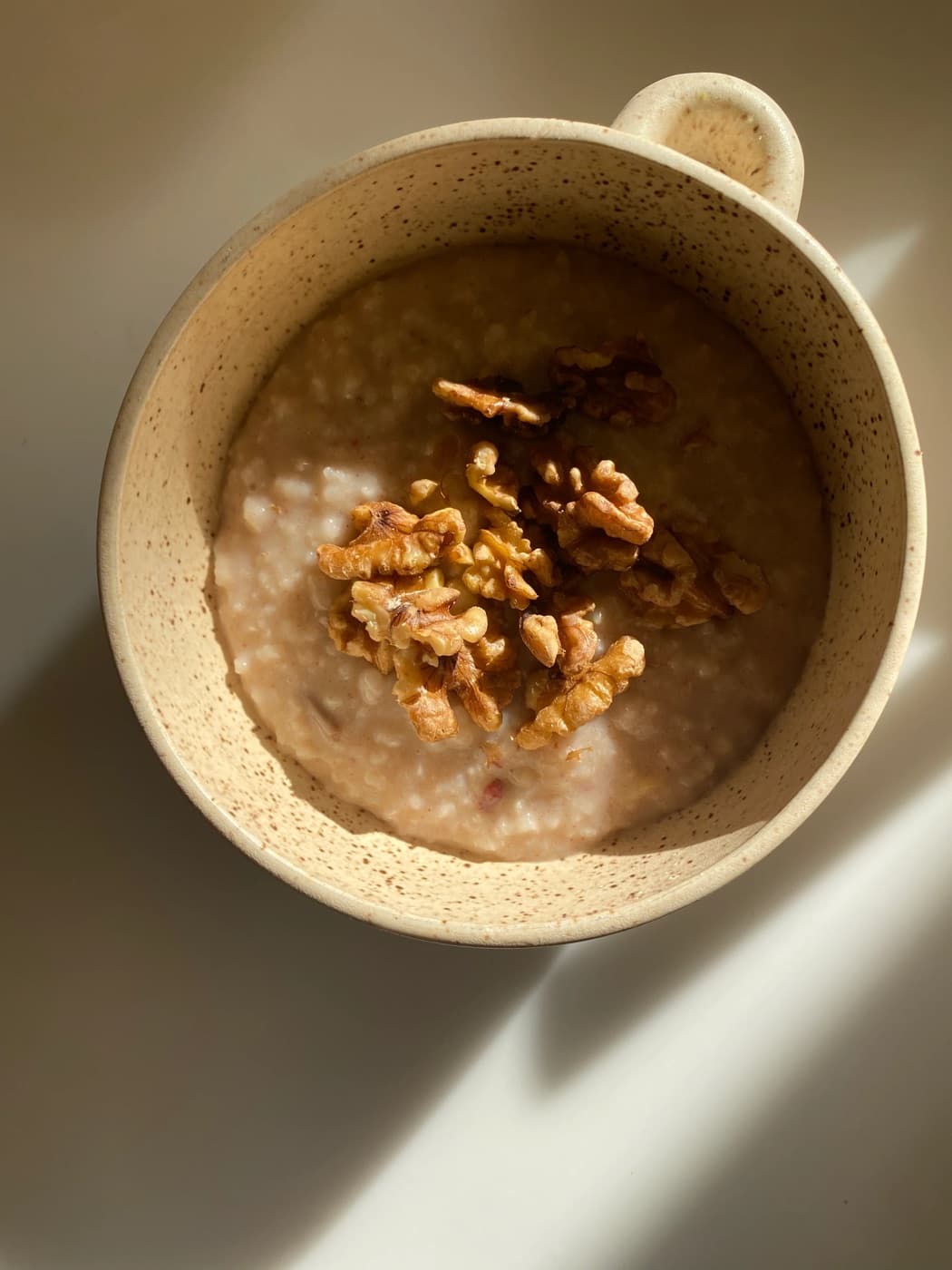
Oats are one of the most consistently recommended lactation foods, and for good reason, even if the direct mechanism isn't fully proven. They're warm, easy to digest, rich in iron and beta-glucans, and calorically substantial enough to be an easy, repeatable breakfast during a season when cooking often falls away. Their reputation as a galactagogue may be more about reliable, sustained energy than a hormonal effect, but that's still genuinely useful.
Fennel
Fennel has a long history in Ayurvedic and other traditional postpartum practices, often taken as a tea. It's thought to have mild phytoestrogenic properties and is also used to ease digestion and gas, which matters for both mother and, through breast milk, baby. Evidence is mostly traditional and observational rather than robust clinical data, but it's low-risk for most mothers in food or tea amounts.
Fenugreek
Fenugreek is probably the most studied culinary galactagogue, with some small trials showing a supply increase for some mothers. But results are inconsistent, effects vary a lot person to person, and it can cause digestive upset, a maple-syrup body odor, or interact with blood sugar. It's not something to start without knowing your own tolerance, and it's worth mentioning to your provider, especially if you're managing gestational diabetes history or thyroid issues.
Brewer's yeast
Brewer's yeast is a traditional addition to lactation cookies and bites, valued for B vitamins, minerals, and a modest protein boost. Its galactagogue effect is largely anecdotal. Where it does help is as a nutrient-dense addition to something a tired mother is already going to eat, like a cookie or energy bite, rather than as a standalone fix.
Healthy fats
This is the most underrated lever. Milk production is metabolically demanding, and adequate fat intake, think ghee, sesame oil, coconut, nuts, seeds, and fatty fish, supports both energy needs and the fat-soluble nutrients that shape milk composition. In Ayurvedic postpartum practice, warm cooked fats like ghee are considered foundational, not optional, precisely because they're calorically dense and easy to digest when eaten with warm food.
How many extra calories does breastfeeding actually require?
Most estimates suggest an additional 300 to 500 calories per day above pre-pregnancy needs while exclusively breastfeeding, though individual needs vary with body size, activity, and how much a baby is feeding. In the early postpartum weeks, undereating is common, not because mothers aren't hungry, but because there's no time or energy to cook. This is often a bigger factor in supply struggles than any missing